
News Center
 2
2

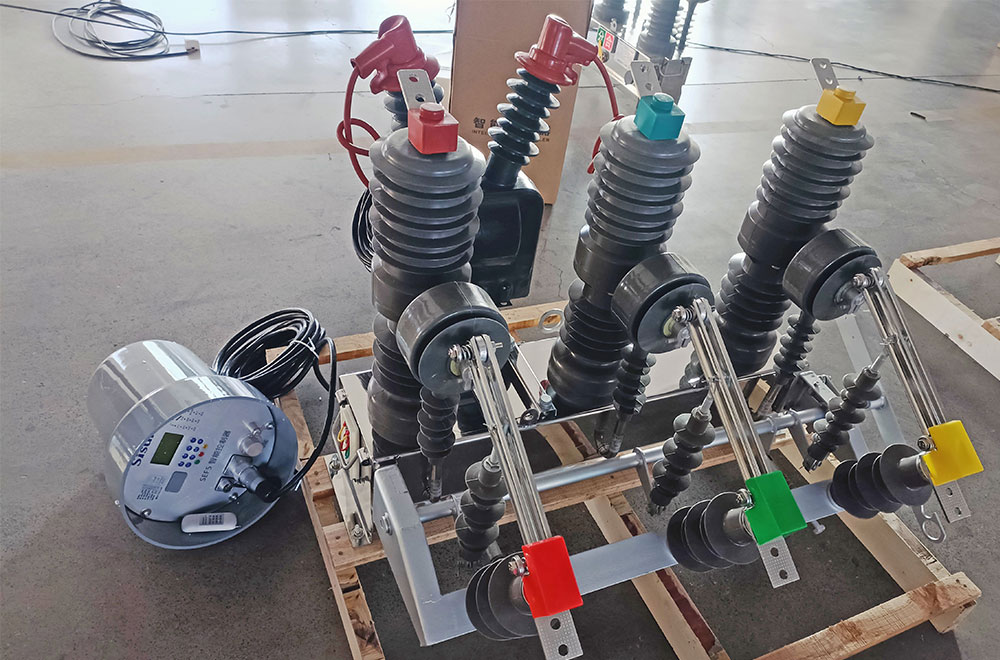
Drop-out fuses are the most widely used overcurrent protection devices in 10kV distribution lines and distribution transformers, known for their simple structure, reliable operation and low cost. Although not large in size, their internal working mechanism is intricately designed and interlinked.
Drop-out fuses consist of the following main components:
Bears the insulation between live parts and ground, while also serving as the structural support for the entire fuse. Usually made of porcelain or composite insulating materials, it must meet the insulation requirements of the corresponding voltage level.
Divided into upper and lower fixed contacts, installed at both ends of the insulation support. The upper fixed contact ("duck bill") contains phosphor bronze elastic pieces providing reliable contact pressure; the lower fixed contact provides support and current conduction.
The fuse tube is the core component of the drop-out fuse, consisting of two layers of structure:
The upper and lower moving contacts are respectively located at both ends of the fuse tube, maintaining close contact with the fixed contacts through the tension of the fuse element.
The fuse element passes through the fuse tube and is tightened at both ends, generating certain tension. The tension of the fuse element pulls the upper moving contact upward, keeping it in close contact with the elastic piece inside the upper fixed contact ("duck bill"). The lower moving contact is simultaneously pulled tight to contact the lower fixed contact. At this time, current flows normally through the path: upper fixed contact → fuse element → lower fixed contact.
When overload or short circuit faults occur, the fault current passes through the fuse element, rapidly raising its temperature. The fuse element material (copper-silver alloy) has a high melting point and breaks after reaching the melting temperature. The moment the fuse element melts, an arc is generated, and the arc extinguishing tube decomposes under the high temperature of the arc to produce large amounts of gas. The gas forms high pressure inside the tube and is ejected from the upper end (single-end exhaust), strongly blowing the arc longitudinally, causing it to rapidly elongate and extinguish at current zero crossing.
When the interrupting current is large, the gas pressure inside the fuse tube rises sharply, and the thin melting piece in the upper end cap also melts, forming simultaneous exhaust from both upper and lower ends (dual-end exhaust). Dual-end exhaust reduces the peak pressure inside the tube, prevents tube bursting, and accelerates arc extinction.
After the fuse element melts, the upper and lower moving contacts lose the tension constraint of the fuse element. The upper moving contact slides off under the elastic force of the upper fixed contact spring piece, and the entire fuse tube flips and drops around the lower shaft under its own weight and spring force, forming a clearly visible open point. This mechanical drop action ensures reliable circuit disconnection.
Although drop-out fuses have a simple structure, the design of each component has undergone rigorous engineering verification, embodying the design philosophy of "simple and reliable" power equipment.
Previous: Not Available


Telephone

Online Service

Follow Us


TikTok

Back to Top